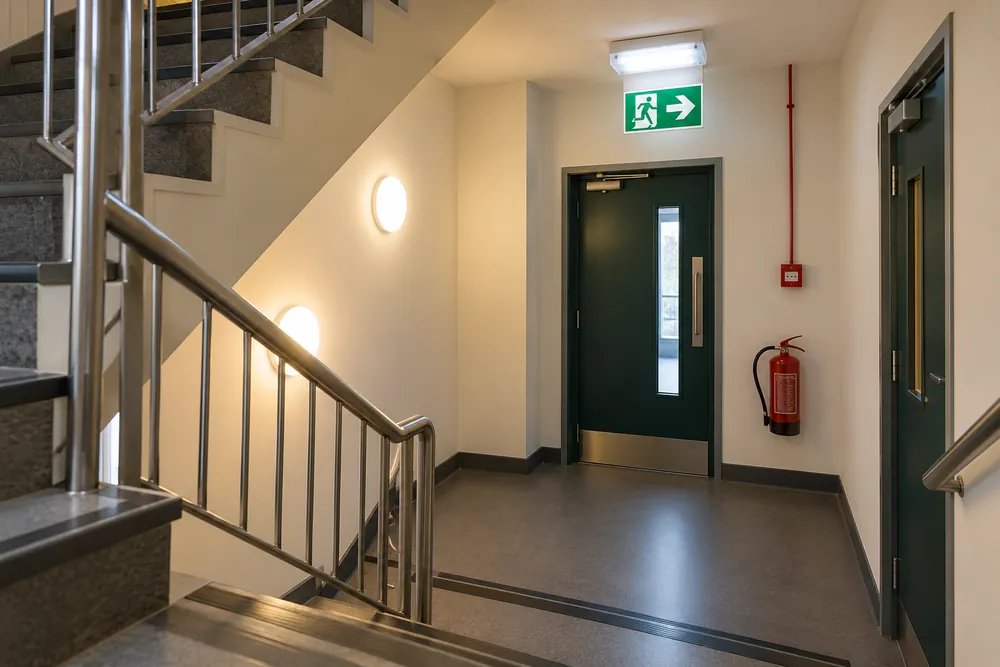
Lighting For A Loss Of Normal Supply
Emergency escape lighting helps people find their way when normal lighting is unavailable. Its purpose is different from everyday illumination or decorative exit signage. The system needs to suit the escape routes and other relevant areas identified by the building design and fire risk assessment.
For your Cardiff premises, agree which emergency light fittings and exit signs the test visit will cover. Self-contained units and centrally supplied systems can need different arrangements. Tell us about automatic test systems, difficult access and any changes to partitions or escape routes before a visit is planned.
When Testing Or A Review Is Needed
Arrange testing when the scheduled inspection is due or when records are missing after a change in responsibility. Failed indicators, damaged fittings and alterations to the building can also justify attention. A new partition or relocated exit may change what needs to be illuminated, even if existing lights still operate.
A functional test checks operation for a short period, while a duration test checks performance over the required operating period. These tests do not automatically establish whether the design provides adequate illumination everywhere. A separate survey may be needed where coverage is uncertain.
The Relevant Standards And Duties
BS 5266-1:2025 is the emergency lighting code of practice for premises. The agreed test programme should reflect the installed system, its design information and manufacturer instructions. Ask the proposal to identify whether it covers functional tests, duration tests, condition inspection or a wider design review.
The Fire Safety Order requires appropriate precautions and a suitable maintenance system where needed. Keep the lighting test record with your other fire safety documents. The responsible person should arrange action on failures rather than assuming a completed test means the system is satisfactory.
Plan The Test Around Occupancy
Testing can reduce the charge available for a later loss of normal lighting. Agree a suitable time so the system can recover before it is needed. This matters for late-opening venues, shift-based operations and areas with limited natural light.
Before starting, identify the means of testing and who can authorise any necessary isolation. Inform relevant staff and consider temporary precautions if protection could be affected. Work should be coordinated with other contractors so separate isolations do not combine to create an unplanned risk.
Record Results By Location
A useful test report identifies each fitting or circuit and records the observed result. Failed units, short operating duration and physical damage should be easy to locate. A floor plan or register helps your team find the equipment and avoids repeated uncertainty at the next visit.
Where work is needed, ask for the proposed remedy and any further testing after repair. Replacement batteries and luminaires must be suitable for the system. Retain the completion record and update the register so future inspections reflect the equipment actually installed.
What Affects The Testing Quote
Luminaire quantities, system type, required test duration and access arrangements affect the work. High-level fittings, secure rooms and incomplete records can add time. A quotation should distinguish planned tests from repairs, replacement equipment and any investigation of design or lighting levels.
Send the latest test report, approximate fitting count and operating hours. Tell us whether the premises use automatic testing and whether staff can provide access to each area. Agree the reporting format and how failed equipment will be quoted so the results lead to clear decisions.
Guidance And References
These references explain the legal framework and relevant standards. The scope for your premises is agreed individually.
Welsh Government: responsible person duties ↗BSI: BS 5266-1:2025 ↗Questions, Answered.
How Do Emergency Lighting Operation Checks Differ From Full Duration Tests?
Emergency lighting functional tests check that the equipment operates when normal lighting fails. Duration tests assess whether it remains operational for the required period. Both need suitable planning and records, and neither replaces a design review where the escape route layout or adequacy of illumination is uncertain after building changes.
Will Emergency Lighting Testing Disrupt My Business?
Emergency lighting testing needs to be planned around your business hours and the system’s recovery requirements. Some checks can be organised with limited interruption, but isolations and duration testing need agreement. Tell us about late shifts, public access and critical areas so the test and any temporary precautions can be scheduled appropriately.