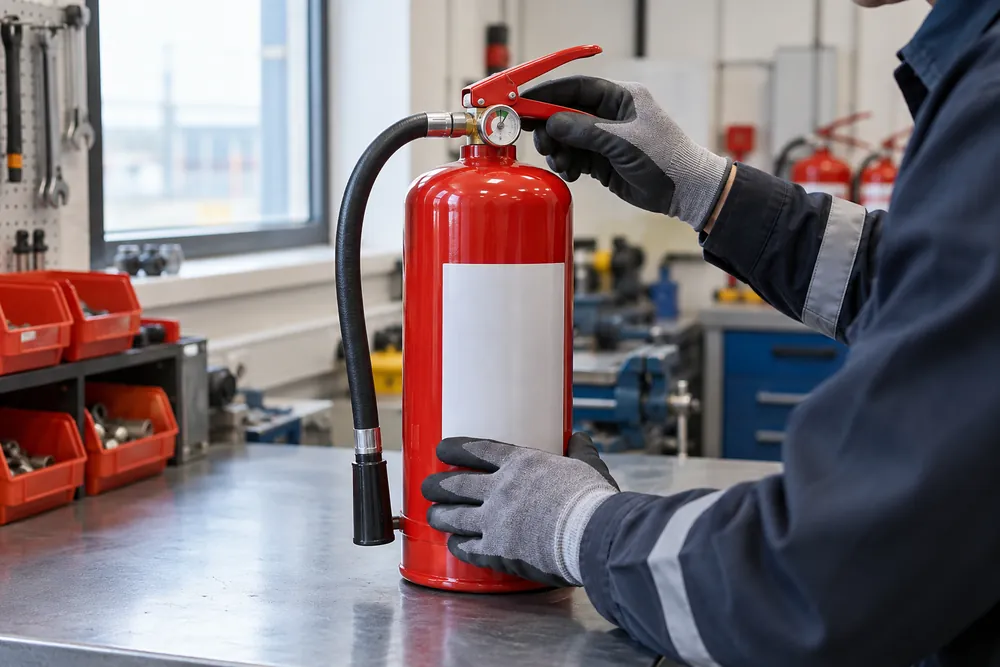
Inspect The Equipment And Its Location
Extinguisher servicing covers more than attaching a new label. The equipment needs to be identifiable, accessible and in suitable condition for its intended use. A service visit should consider physical damage, corrosion, safety devices, hoses and the relevant operating indicators for the extinguisher type.
Its location also matters. Stock, furniture or a changed layout can obstruct equipment that was once easy to reach. Tell us about changes in processes or stored materials so any concern about suitability can be raised rather than assuming the original provision still matches your risks.
When To Arrange Servicing
Arrange servicing when your equipment is due under its maintenance programme or when you take over premises without reliable records. An extinguisher that has been used, damaged or tampered with needs attention promptly. Do not assume that an apparently full cylinder is ready for service after a partial discharge.
Routine visual checks between visits help identify missing equipment, blocked access and obvious damage. These checks support the maintenance programme and do not replace specialist servicing. Staff should know how to report a concern and who can authorise replacement or temporary arrangements.
The Applicable Maintenance Standard
BS 5306-3:2017 is the code of practice for commissioning and maintenance of portable fire extinguishers. The appropriate procedure depends on the extinguisher type, age, condition and manufacturer instructions. Different equipment may need different maintenance actions rather than a single generic treatment.
The Fire Safety Order requires fire precautions to be maintained where necessary to safeguard relevant people. Equipment provision should follow the risk assessment and the hazards present. Servicing is not a substitute for staff training, safe evacuation procedures or a review of the building’s fire strategy.
What Happens During A Visit
First, confirm the number and types of extinguishers and where they are located. The engineer inspects the equipment within the agreed scope and records the work undertaken. Where equipment needs replacement, further servicing or removal from use, the reason should be explained clearly.
Any work involving discharge, pressure or internal examination requires suitable procedures and equipment. Your facilities team should not attempt these tasks from general online instructions. Arrange safe access around machinery, controlled areas and occupied spaces so the visit does not create a separate workplace hazard.
An Equipment Record You Can Use
Ask for a register or service record that allows individual units to be traced by location. A simple list of defects, recommended action and completed work helps you manage the next steps. Where an item is beyond suitable service condition, the record should make that status clear.
Agree who approves replacements and how removed equipment will be handled. Keep the latest report with your fire safety records and tell staff about any changed locations. If a temporary gap in provision arises, the responsible person should assess the risk and arrange suitable precautions.
What Affects The Servicing Quote
The number, type and condition of extinguishers influence cost, along with access and the work due on each unit. Replacement equipment and specialist maintenance can be separate from the basic visit. Multiple sites and restricted working windows should be identified before the quotation is agreed.
Send the existing register or a list of equipment if you have one. Tell us about units that are missing, discharged or visibly damaged. Ask the proposal to distinguish the visit charge, planned servicing, potential replacements and any disposal arrangements so you can compare the scope accurately.
Guidance And References
These references explain the legal framework and relevant standards. The scope for your premises is agreed individually.
Welsh Government: responsible person duties ↗BSI: BS 5306-3:2017 ↗Questions, Answered.
How Often Do Fire Extinguishers Need Servicing?
Fire extinguisher servicing is normally planned annually, with further maintenance depending on equipment type, age and manufacturer instructions. Routine visual checks are also needed between specialist visits. Check the existing records and service labels, then agree a programme that identifies what each unit needs rather than treating every extinguisher as identical.
Does A New Extinguisher Need Commissioning?
A new fire extinguisher needs appropriate commissioning before it is treated as ready for use. A delivery alone does not confirm that the unit is suitable, undamaged and correctly positioned for your premises. Arrange the relevant checks and records, then include it in your site’s routine inspection and maintenance programme.